The Glass Atelier
Lavandin Ätherisches Öl
Lavandin Ätherisches Öl
Verfügbarkeit für Abholungen konnte nicht geladen werden
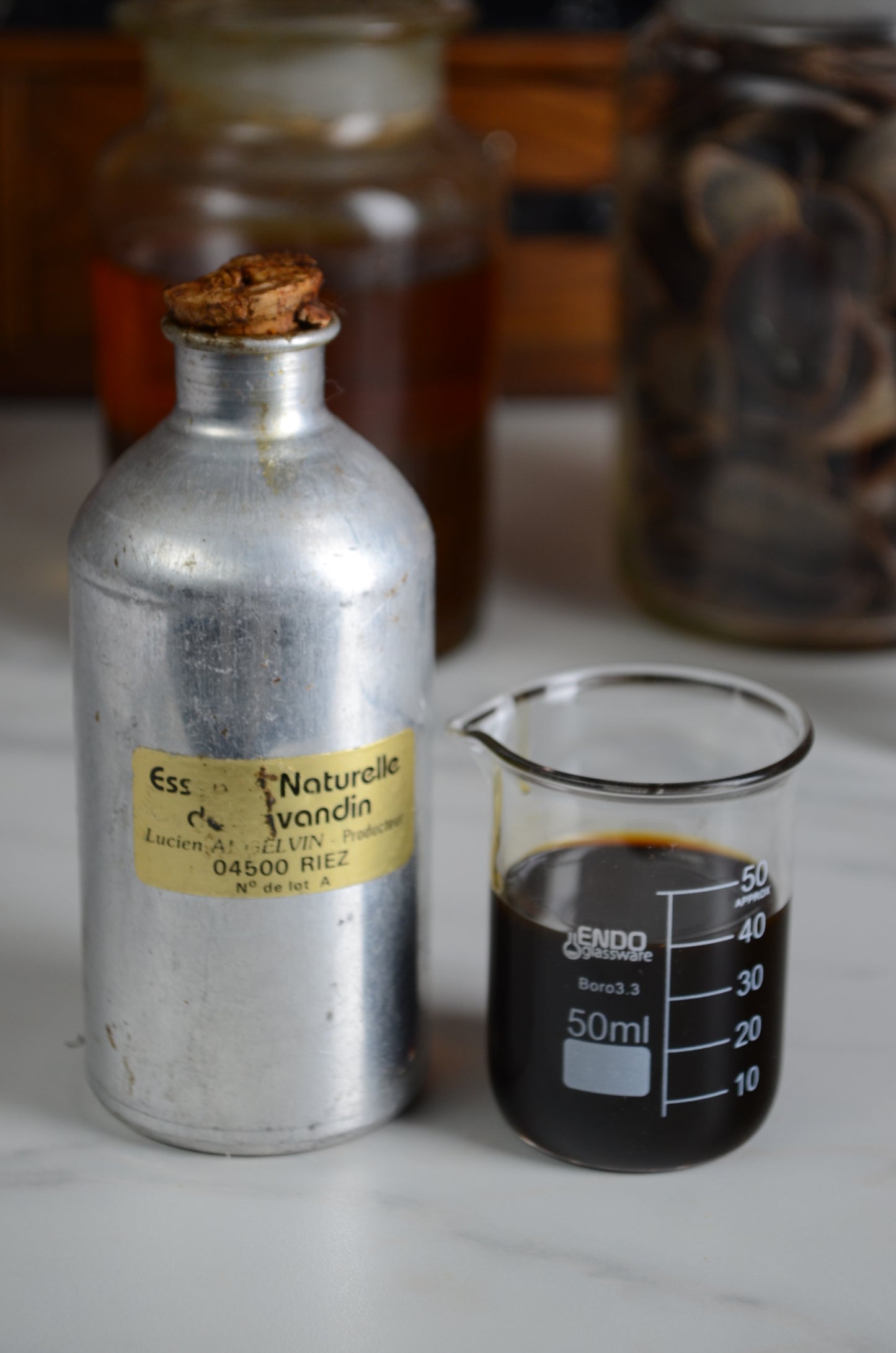
Vintage Lavandin Ätherisches Öl (1980)
Herkunft: Frankreich oder Spanien (je nach Originalcharge)
Botanischer Name: Lavandula × intermedia
Ungefähres Produktionsjahr: 1980
Gewinnung: Wasserdampfdestillation der blühenden Sprossspitzen.
Olfaktorische Beschreibung
Dieses Lavandin-Ätherische Öl stammt aus einer Produktion um 1980 und hat über vier Jahrzehnte natürliche Alterung erfahren.
Im Gegensatz zu einem frischen Lavandin, bei dem frische, kampferartige und krautige Noten dominieren, hat die lange Reifung das aromatische Profil erheblich verändert. Die flüchtigeren Noten wurden gemildert, wodurch wärmere, abgerundetere und komplexere Facetten zum Vorschein kommen.
Die Eröffnung bewahrt den charakteristischen aromatischen Charakter der Lavendelfamilie, jedoch mit einer merklich reduzierten kampferartigen Intensität. Im Laufe der Entwicklung treten trockene Kräuternuancen, Heunoten, aromatisches Holz und leichte balsamische Facetten auf, die an alte Fougère-Parfums und klassische europäische Eau de Colognes erinnern.
Das Ergebnis ist ein Material von großer Weichheit, Tiefe und Ausgewogenheit, das in modernen Produktionen schwer zu finden ist.
Aromatische Entwicklung
- Kopfnote: trockener, aromatischer und leicht kampferartiger Lavendel.
- Herznote: krautig, trocken-blumig und leicht balsamisch.
- Basisnote: Heu, aromatisches Holz und langanhaltende warme Noten.
Anwendungen in der Parfümerie
Besonders interessant für:
- Vintage-Parfümerie.
- Historische Rekonstruktionen.
- Klassische Fougères.
- Aromatische Akkorde.
- Traditionelle maskuline Kompositionen.
- Naturparfümerie mit historischer Inspiration.
Passt besonders gut zu:
- Eichenmoos.
- Geranie.
- Rosmarin.
- Salbei.
- Vetiver.
- Patchouli.
- Weihrauch.
- Ladanum.
- Cumarin.
- Bergamotte.
Sein gealtertes Profil verleiht ein Gefühl von Reife und Natürlichkeit, das mit zeitgenössischen Materialien schwer zu reproduzieren ist.
Technische Hinweise
- Farbe: goldgelb bis hellbernsteinfarben.
- Konsistenz: flüssig.
- Aromatische Intensität: mittel.
- Diffusion: mittel.
- Haltbarkeit: länger als bei frischem Lavandin.
Wie bei anderen alten ätherischen Ölen haben Jahrzehnte der Reifung eine natürliche Integration ihrer aromatischen Komponenten ermöglicht, wodurch ein weicheres und komplexeres Profil entsteht, als es bei frisch destillierten Ölen zu beobachten ist.
Historisches Interesse
Vintage-Ätherische Öle sind authentische olfaktorische Dokumente einer Zeit vor den heutigen Produktionstechniken, Sortenauswahl und industriellen Standardisierung.
Dieses Lavandin von 1980 bietet die Möglichkeit zu erleben, wie aromatische Rohstoffe über Jahrzehnte hinweg bei richtiger Lagerung reifen und Facetten enthüllen, die in zeitgenössischen Materialien selten zu finden sind.
Sammlerstück
Über sein parfümerisches Interesse hinaus stellt dieses ätherische Öl ein Stück aromatischer Geschichte dar. Seine lange Reifung hat einen weithin bekannten Rohstoff in ein einzigartiges Material verwandelt, das besonders von Sammlern, Parfümeuren und Liebhabern historischer Essenzen geschätzt wird.
Teilen